 Formsy
Trademark Registration Online in India
Register your trademark online in India with Formsy. Secure your brand name, logo, or slogan under Indian trademark law through expert guidance and quick approval.
- Trademark Search & Application Filing
- Renewal & Opposition Handling
- IP India Registered Experts
- Expedited Trademark Filing & Approval
- Most trusted choice for entrepreneurs
Enter your details to receive a full quote and consultation

What is Trademark Registration?
Trademark registration is the legal process of securing exclusive rights over a distinctive mark — such as a brand name, logo, symbol, slogan, design, or combination thereof—that identifies and distinguishes your goods or services from competitors in the marketplace. In India, trademark registration is governed by the Trademarks Act, 1999 and Trade Marks Rules, 2017, which provide comprehensive legal protection against infringement and unauthorized use.
A registered trademark is a mark that has been officially recognized and recorded in the trademark registry maintained by the Intellectual Property India authorities. Registration grants the owner enhanced legal rights, including the exclusive right to use the mark in connection with specified goods or services, and provides a solid legal foundation to pursue remedies against infringement.
Importance of Trademark Registration
Securing a trademark for your business, which includes crucial aspects like brand registration (for your name) and logo registration (for your visual identity), offers numerous benefits of trademark registration that enhance brand protection and overall business value:
- Legal Protection: Exclusive rights granted under the Trademarks Act, 1999 prevent competitors from using identical or similar marks. You can take immediate legal action against infringement, with registered trademarks serving as valid evidence of ownership in court proceedings.
- Brand Recognition: Registered trademarks build consumer trust and loyalty by linking your brand with consistent quality and reliability. The ® symbol adds credibility and prestige, assuring customers they're purchasing from an authentic, legally protected brand.
- Market Differentiation: A distinctive trademark helps your products or services stand out in crowded markets, establishing unique brand identity that customers can easily recognize and remember. This differentiation strengthens customer loyalty and influences purchasing decisions.
- Business Asset: A registered trademark is a valuable intangible asset that can be sold, licensed, franchised, or used as collateral for loans. Its monetary value increases over time as your brand gains reputation and market presence.
- Business Expansion: Trademark ownership allows you to license your brand to others, enabling market expansion without direct investment. Registration also facilitates international expansion by serving as the basis for foreign trademark applications.
- Long-Term Security: Trademark validity of 10 years with unlimited renewals provides perpetual brand protection. This ensures your marketing investments and brand-building efforts remain safeguarded throughout your business lifecycle.
- Competitive Advantage: Registration creates entry barriers that prevent competitors from copying your brand, maintaining your market position and preventing brand dilution. It also enables customs officials to block counterfeit goods at borders.
Types of Trademark Registration and Classes in India
Trademark registration in India encompasses several categories, each designed to protect different aspects of intellectual property:
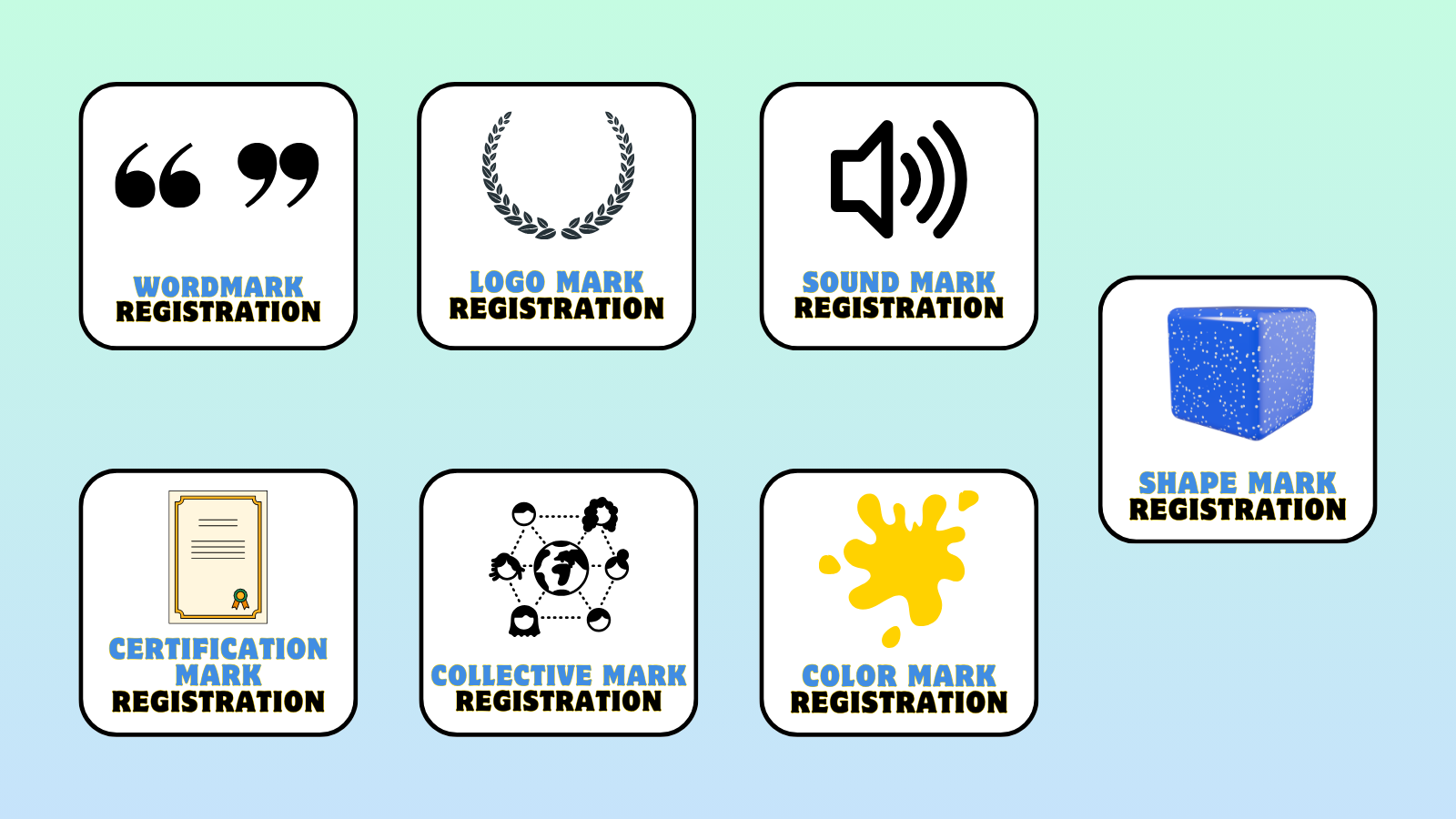
1. Wordmark Registration
This is often what businesses seek when looking for brand name registration. It protects company names, product names, slogans, and other textual identifiers.
2. Logo Mark Registration
Commonly understood as logo registration or device mark registration, this category protects graphic symbols, designs, or visual elements that represent your brand.
3. Sound Mark Registration
For distinctive sounds or jingles associated with brands.
4. Shape Mark Registration
For three-dimensional shapes of products or packaging.
5. Color Mark Registration
For specific colors or color combinations uniquely associated with a brand.
6. Collective Mark Registration
For marks used by members of an association or collective group.
7. Certification Mark Registration
For marks indicating that products or services comply with specific standards.
Trademark Classes:
Selecting the correct trademark class is crucial for effective brand protection. Businesses should identify their core products and services, consult the Nice Classification system, and consider potential business expansion to cover future offerings. Multiple class registration is permitted if your business operates across different categories.
The Nice Classification divides trademarks into 45 classes:
- Classes 1-34: Cover goods and products
- Classes 35-45: Cover services
- Class 1: Chemicals, fertilizers, fire extinguishing compositions
- Class 2: Paints, varnishes, lacquers, preservatives against rust
- Class 3: Cosmetics, cleaning preparations, toiletries, perfumery
- Class 4: Industrial oils, greases, lubricants, fuels, illuminants
- Class 5: Pharmaceuticals, dietary supplements, medical preparations
- Class 6: Common metals, metal building materials, hardware
- Class 7: Machines, machine tools, motors and engines
- Class 8: Hand tools, cutlery, side arms
- Class 9: Scientific apparatus, computers, software, electronics
- Class 10: Medical apparatus, surgical instruments
- Class 11: Lighting, heating, cooling, cooking apparatus
- Class 12: Vehicles, apparatus for locomotion by land, air or water
- Class 13: Firearms, ammunition, explosives, fireworks
- Class 14: Precious metals, jewelry, watches, clocks
- Class 15: Musical instruments
- Class 16: Paper, printed matter, stationery, office supplies
- Class 17: Rubber, plastics in extruded form, insulation materials
- Class 18: Leather goods, luggage, bags, umbrellas
- Class 19: Non-metallic building materials
- Class 20: Furniture, mirrors, picture frames
- Class 21: Household utensils, glassware, porcelain, earthenware
- Class 22: Ropes, tents, awnings, tarpaulins
- Class 23: Yarns and threads for textile use
- Class 24: Textiles, bed covers, table covers
- Class 25: Clothing, footwear, headwear
- Class 26: Lace, embroidery, ribbons, buttons
- Class 27: Carpets, rugs, mats, linoleum, wall coverings
- Class 28: Games, toys, sporting articles
- Class 29: Meat, fish, poultry, preserved foods
- Class 30: Coffee, tea, flour, bakery products
- Class 31: Agricultural products, fresh fruits and vegetables
- Class 32: Beers, mineral waters, non-alcoholic beverages
- Class 33: Alcoholic beverages (except beers)
- Class 34: Tobacco, smokers' articles, matches
- Class 35: Advertising, business management, office functions, retail services
- Class 36: Financial services, insurance, real estate affairs
- Class 37: Construction, installation and repair services
- Class 38: Telecommunications services
- Class 39: Transportation, travel arrangement, logistics, storage
- Class 40: Material treatment, manufacturing services
- Class 41: Education, entertainment, sporting and cultural activities
- Class 42: Scientific and technological services, IT services, software development
- Class 43: Food and beverage services, temporary accommodation
- Class 44: Medical, veterinary, beauty care, agriculture services
- Class 45: Legal services, security services, personal and social services
Who Should Apply for a Trademark in India?
In India, any person or business that owns a unique brand name, logo, or mark can apply for a trademark — even if the brand is not yet in use (you can file with “proposed to be used” status).
| Applicant Type | Who They Are |
|---|---|
| Individual | A single person, even without a registered business |
| Sole Proprietor | One-person business owner |
| Partnership Firm | Two or more partners running a business |
| Company (Pvt Ltd / Ltd / OPC) | Incorporated legal entity |
| LLP (Limited Liability Partnership) | Business registered as an LLP |
| Trust / Society / NGO | Non-profit or charitable organization |
| Joint Owners | Two or more people co-owning a brand |
| Foreign Applicant | Brand owner from outside India |
Documents Required for Trademark Registration
Proper documentation is crucial for a smooth trademark registration process, with several key documents required to complete your application:
1. Trademark Application Forms
- Form TM-A for standard applications
- Power of Attorney if filing through an agent or attorney
- Form TM-M for various miscellaneous requests
2. Applicant Identity Documents
- For individuals: PAN card, Aadhaar card, voter ID, or passport copy
- For companies: Certificate of Incorporation, MOA/AOA
- For partnerships: Partnership deed and registration certificate
- For LLPs: LLP Agreement and registration certificate
3. Trademark Representation Materials
- Clear representation of the mark in JPEG format (for logos/device marks)
- Specific format requirements for sound marks, 3D marks, or other non-traditional marks
- Label specimens showing actual use of the mark on goods or in services
4. Priority Documents (if applicable)
- Certified copy of priority application if claiming convention priority
- English translation of priority trademark registration documents if in a foreign language
- Form TM-P for claiming convention priority
5. Use-Related Documentation
- Affidavit of use if the mark is already in commercial use
- User declaration with specific dates of first use in commerce
- Evidence of use, such as invoices, advertisements, and packaging samples
6. Business Documentation
- Business registration documents appropriate to the entity type
- GST registration certificate
- Shop and establishment certificate (if applicable)
7. Additional Supporting Materials
- Consent letter from living persons if their name/likeness appears in the mark
- NOC from the relevant authority for certain regulated terms
- Supporting evidence for acquired distinctiveness claims (if applicable)
How to Process the Trademark Registration Application?
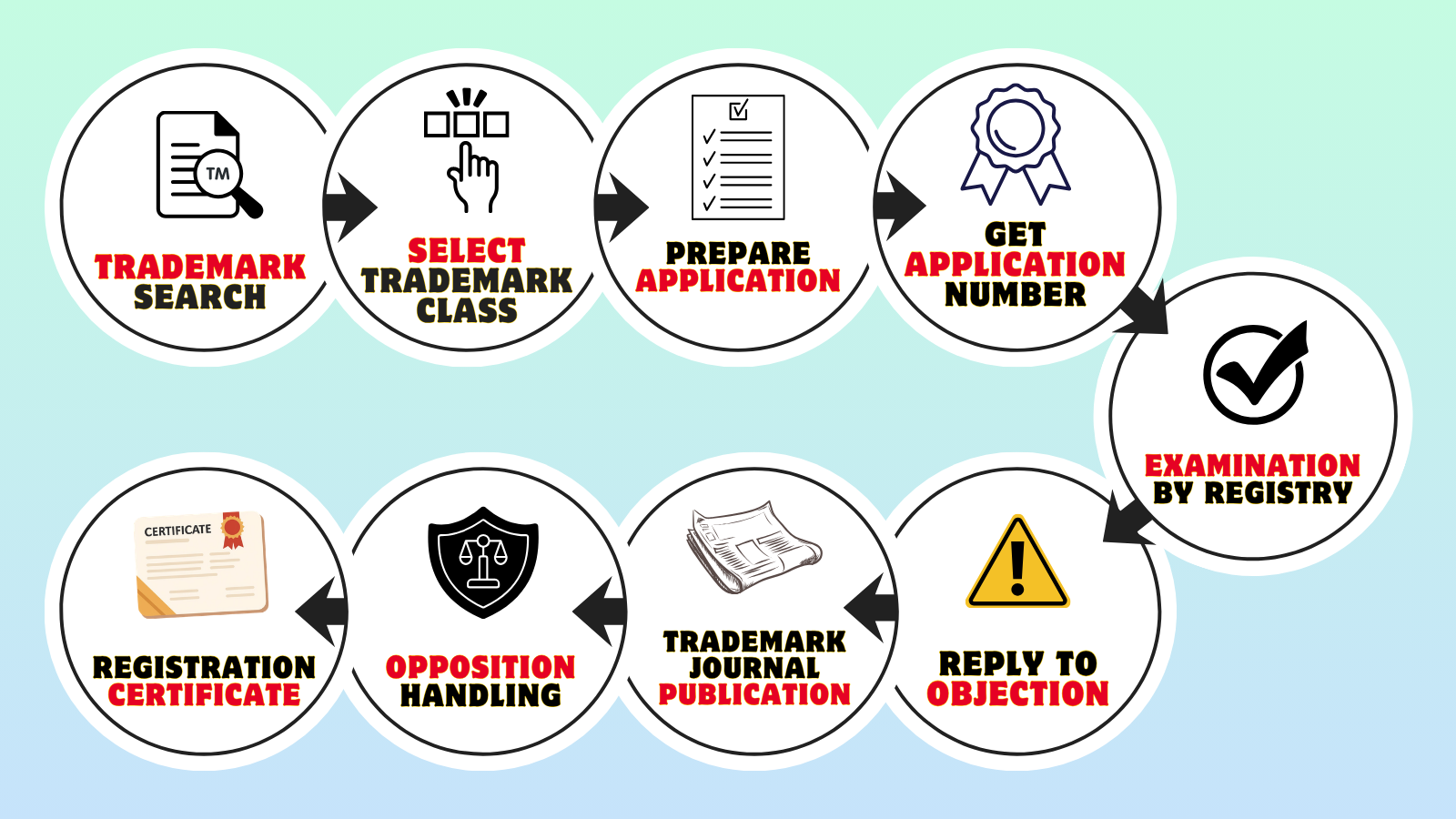
Registering a trademark in India involves several steps governed by the Trade Marks Act, 1999, ensuring legal protection for your brand name, logo, tagline, product packaging, sound mark, or any other distinctive sign. Here's a detailed breakdown:
-
Step-1: Conduct a Trademark Search
Start with a thorough trademark search on the IP India website. Ensure your proposed mark (name, logo, slogan) is unique and not identical or deceptively similar to existing trademarks. Searching reduces the risk of rejection or opposition later in the process. -
Step-2: Choose the Appropriate Trademark Class
Trademark protection is granted based on classes—there are 45 trademark classes (Classes 1–34 for goods, 35–45 for services). Choose one or more classes depending on the nature of your business. Incorrect class selection can lead to legal gaps or rejection of your application. -
Step-3: Prepare the Trademark Application
File Form TM-A either online or physically at the Trademark Registry Office. Key details to be included: Applicant name and address, Type of mark (wordmark, logo, sound mark, etc.), Description of goods/services, Trademark class, Date of first use (if applicable). Attach a clear image of the logo/symbol (if applicable) and a power of attorney if filing through an agent. -
Step-4: Allotment of Application Number & TM Symbol Usage
Once submitted, you will receive an application number. You can now legally use the ™ (TM) symbol, indicating your mark is under application. The application can be tracked online. -
Step-5: Formal Examination by Trademark Registry
The Trademark Examiner reviews your application to verify: Legal eligibility under the Trademarks Act, Non-conflict with existing marks, Descriptive or generic nature of the mark. The Examiner then issues an Examination Report. -
Step-6: Respond to Trademark Objection (if any)
If your application is objected to under Section 9 (absolute grounds) or Section 11 (relative grounds), you’ll receive a notice. You must file a Trademark Objection Reply within 30 days with proper legal reasoning, evidence of use, and clarifications. If needed, your representative may be called for a Show Cause Hearing. -
Step-7: Trademark Journal Publication
If accepted by the Registrar (either directly or after objection resolution), your trademark is published in the Trademark Journal. The mark remains in the journal for 4 months to allow for public scrutiny and opposition, if any. This is a critical step—many applications face trademark opposition at this stage. -
Step-8: Handling Trademark Opposition (if filed)
A third party may file a notice of opposition within 4 months of journal publication. If this happens, you must file a counter-statement within 2 months, defending your trademark. Both parties submit evidence and may attend hearings before the Registrar makes a decision. If no opposition is filed—or if you win the opposition—your mark proceeds to registration. -
Step-9: Issuance of Registration Certificate
If your application clears all stages, you’ll receive the Trademark Registration Certificate from the Trademark Registry. You can now legally use the ® (Registered) symbol alongside your brand name/logo. The registration is valid for 10 years and can be renewed indefinitely every 10 years.
Government Fees & Pricing Involved in Trademark Registration
Fees for Trademark Registration in India depend on two main factors — who is applying and the type of service you choose.
Here’s a quick breakdown:
1. Government Filing Fees
- Individuals / Startups / Small Enterprises – ₹9,000 per class (online filing)
- Others (companies, large firms) – ₹9,000 per class (online filing)
- Physical Filing Surcharge – Additional ₹1,000 if you file offline instead of online
2. Optional & Additional Government Fees
- Expedited Examination – ₹20,000 per class (individuals/startups) / ₹40,000 per class (others)
- Renewal (every 10 years) – ₹9,000 per class (individuals/startups) / ₹18,000 per class (others)
- Restoration (late renewal) – ₹5,000 + renewal fees (within 6-month grace)
- Assignment Recording – ₹9,000 (individuals/startups) / ₹18,000 (others) per mark
- Change of Name/Address – ₹900 (individuals/startups) / ₹1,800 (others)
- Recordal of License – ₹6,000 (individuals/startups) / ₹12,000 (others)
Apart from this, you have an option to avail exemptions on the government fees by providing required government certifications like Udyam registration.
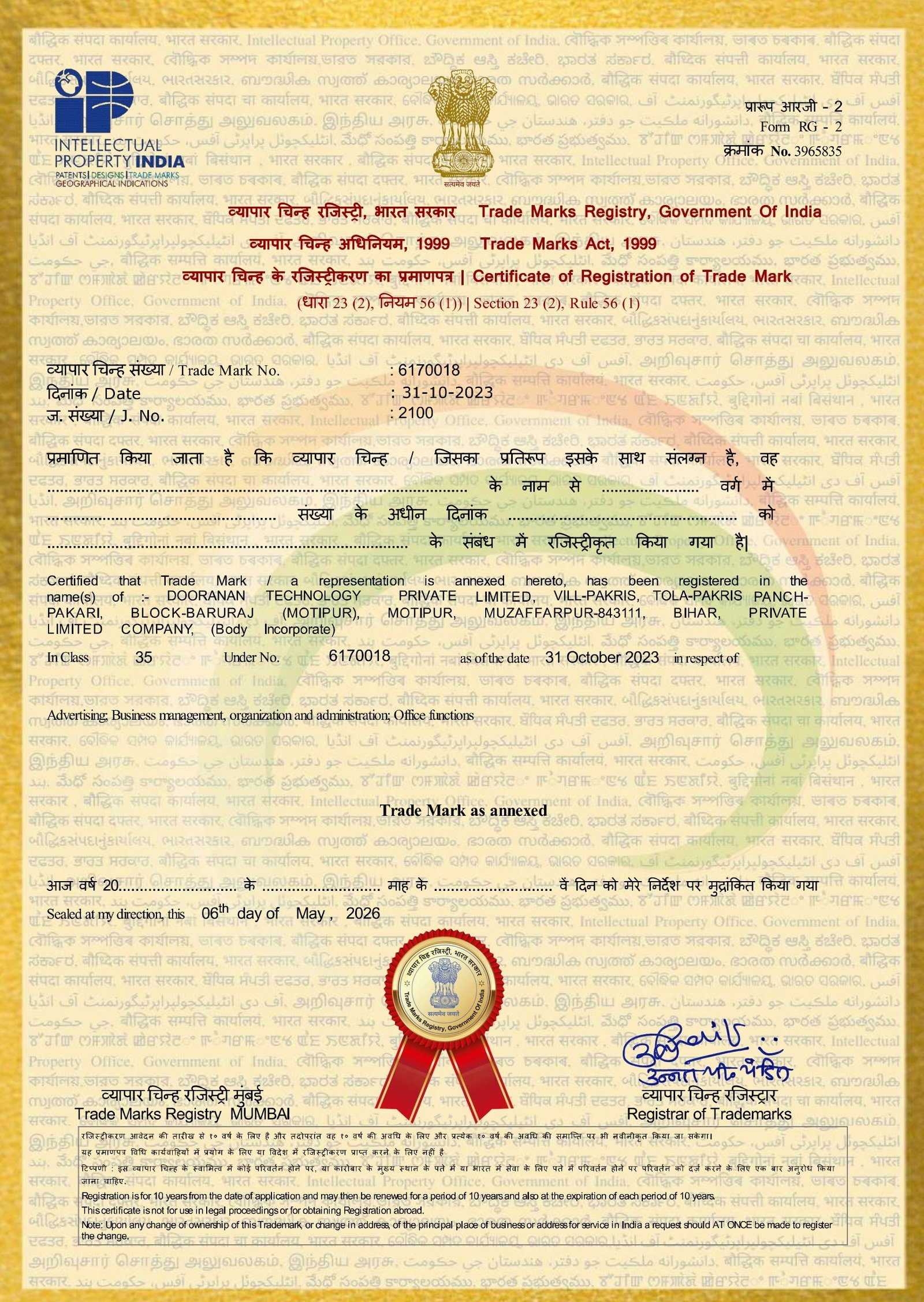
Trademark Registration Certificate
A Trademark Registration Certificate is an official document issued by the government that grants legal protection to your brand name, logo, or slogan. It serves as proof of your exclusive rights to use the trademark in connection with your goods or services.
This certificate helps prevent unauthorized use or infringement by others and strengthens your brand’s identity in the market. Holding a trademark registration certificate also boosts your business credibility and can be a valuable asset for expansion or licensing opportunities.
How to Download a Trademark Registration Certificate?
Follow these steps to download your certificate from the official government website:
- Visit the official IP India Trademark Portal: ipindia.gov.in.
- Click on the "Related Links" tab and select "E-Registration Certificate."
- Enter your Trademark Application Number.
- Verify the details displayed on the screen.
- Click on the "View Certificate" or "Download PDF" option.
- Save the certificate for future use.
How to Check Trademark Application Status?
You can monitor the progress of your application at each stage using the online status checker:
- Go to the Trademark Application/Registration Status page on ipindiaonline.gov.in
- Enter your Application Number in the provided field
- Click "View" to see the current status (e.g., "Send to Vienna Codification", "Advertised", "Registered", etc.)
- Review any alerts or actions required (such as objection replies or hearings)
- Track updates until you see the status as "Registered".
What Happens After Trademark Registration?
Once your trademark is registered and you receive the certificate, your brand protection is active. There are a few key responsibilities to maintain your rights:
- Use the ® Symbol: You now have the legal right to use the ® (Registered) symbol with your mark. This warns competitors that your trademark is legally protected.
- Monitor for Infringement: It is the owner's responsibility to monitor the market for any unauthorized use of their mark and take legal action if necessary.
- Renew Your Trademark: Your registration is valid for 10 years. You must file for renewal to keep the protection active.
- Update Your Details: If your address or business details change, you should update the Trademark Registry to ensure all correspondence is received.
Trademark Validity & Renewal
• Initial Validity Period
A registered trademark in India is valid for 10 years from the date of application or registration. This 10-year period applies regardless of trademark type—whether wordmark, logo, sound mark, or shape mark. The validity period begins from the filing date mentioned in the registration certificate issued by the Registrar of Trademarks.
• Renewal Process
Trademark renewal can be done indefinitely, allowing perpetual brand protection through successive 10-year periods. The renewal application (Form TM-R) can be filed within one year before expiration or six months after expiration upon payment of prescribed renewal fees.
Filing after expiration requires payment of additional surcharge fees. Once renewed, the trademark remains valid for another 10 years from the expiration date of the previous registration period.
Need Help with Trademark Registration?
Let our experts handle the trademark registration process for you. Get started today!
Frequently Asked Questions (FAQs)
Is trademark registration mandatory in India?
No, trademark registration is not compulsory in India. However, registration provides legal protection, exclusive rights, and the ability to file infringement suits, which unregistered marks cannot access. For unregistered marks, only passing off actions are available, which are harder to prove.
How long does trademark registration take in India?
Trademark registration typically takes 18-24 months in straightforward cases without objections or oppositions. However, the trademark application number is usually issued within 1-2 days after filing, allowing you to use the ™ symbol immediately.
What is the validity period of a registered trademark?
A registered trademark is valid for 10 years from the date of registration. It can be renewed indefinitely for successive 10-year periods upon payment of prescribed renewal fees.
When can I use the ™ and ® symbols?
The ™ symbol can be used immediately after filing a trademark application, indicating that a trademark claim exists. The ® symbol can only be used after receiving the official trademark registration certificate from the Trademark Registry.
Can I register my company name as a trademark?
Yes, you should register your company name as a trademark even if it's already registered under the Companies Act. Company registration only secures the business name in the company register but doesn't protect it as a brand identity or prevent others from using similar names in different classes.
What are the stages of trademark registration?
The process includes trademark search, filing the application, formal examination by the Trademark Office, publication in the Trade Marks Journal for 4 months, opposition period (if any), and final registration. If objections arise, you must file a proper reply within one month, or the application may be abandoned.
Can a registered trademark be amended later?
Yes, under Section 22 of the Trademarks Act, amendments are allowed provided they don't substantially change the character of the mark. Only superficial or insignificant features can be modified by filing a request with 16 copies of the amended label mark.
Can a foreign applicant apply for trademark registration in India?
Yes, foreign applicants can apply for trademark registration in India. However, if not domiciled in India, a local service address must be provided for correspondence purposes.
How can I register my trademark internationally?
You can file directly in the jurisdiction of interest or use the Madrid Protocol system, which enables registration in multiple countries using one application and claiming priority from your home country. Priority must be claimed within six months, and not all countries are members of the Madrid Protocol.
What happens if someone opposes my trademark application?
Once your trademark is published in the Trade Marks Journal, there's a 4-month opposition window for third parties to challenge registration. If opposition is filed, you must respond with legal arguments and evidence to overcome the objection, which may lead to hearings.
Is trademark registered in India valid in foreign countries?
No, a trademark registered in India is only valid within Indian territory. For protection in other countries, you must file separate applications in those jurisdictions or use international registration systems like the Madrid Protocol.
Can trademark ownership be transferred?
Yes, the ownership and rights over a registered trademark can be transferred to another person or company through trademark assignment by executing proper legal documents and recording the transfer with the Trademark Registry.
Can I register a logo under Copyright Act also?
Yes, logos can be registered as trademarks and also protected under the Copyright Act for artistic work. Dual registration provides comprehensive legal protection for brand identity elements.
Who can apply for trademark registration?
Any person, proprietor, partnership firm, company, trust, or legal entity claiming to be the owner of a trademark used or proposed to be used can apply. For companies about to be formed, anyone can apply in their name for subsequent assignment.
What should I do before filing a trademark application?
Conduct a comprehensive trademark search through the Trademark Office database to ensure your mark is unique and doesn't resemble existing registered marks. This minimizes chances of rejection, opposition, or infringement allegations.