 Formsy
Digital Signature Certificate
Secure your online transactions with a Class 3 Digital Signature Certificate (DSC) — the highest level of digital authentication trusted for e-filing, government tenders, and legal contracts across India. Get seamless, expert assistance with Formsy to quickly obtain your Class 3 DSC and ensure hassle-free compliance.
- Government-approved Class 3 DSC
- Valid for Legal & Financial Transactions
- Minimal Document Verification
- Works with GST, MCA, e-Tenders
- Transparent Pricing, No Hidden Charges
Get Your DSC with Expert Help

What is a Digital Signature Certificate (DSC)?
A Digital Signature Certificate (DSC) is a secure electronic credential that verifies your identity in the digital world, serving as a legally valid alternative to a handwritten signature. It uses advanced cryptographic techniques to link your identity to a digital document, generating a unique encrypted hash with your private key, which can be verified by others using your public key to ensure document authenticity and integrity.
Benefits of a Digital Signature Certificate
Even individuals and professionals can significantly benefit from a digital signature certificate:
- Faster Process: Speed up online applications by eliminating printing and physical signatures, enabling instant signing and quicker approvals.
- Enhanced Security: Protect your data with cryptographic encryption that creates a unique, tamper-proof digital fingerprint tied to your identity.
- Convenience: Sign documents remotely anytime, anywhere using a portable USB token without the need for physical presence.
- Reduced Paperwork: Support a paperless workflow by minimizing printing, storage, and physical files, saving costs, and promoting sustainability.
- Online Tax Filing: Securely e-file income tax returns with strong authentication, ensuring genuine submission and faster processing.
- Online Banking & Transactions: Add an extra security layer for critical banking operations, preventing unauthorized transactions and phishing.
What are the Types of Digital Signature Certificate Classes?
The classes of DSCs were primarily distinguished by the level of verification required to issue them and the associated level of trust and security they offered.
.png)
1. Class 1 DSC (Discontinued)
- Purpose: These certificates offered the lowest level of assurance and were typically issued for low-risk online interactions, primarily for securing personal email communication.
- Verification: Identity verification for Class 1 DSCs was basic, typically involving the validation of the user's name and email address against a database.
- Status: Class 1 DSCs are no longer accepted for any official use and have been discontinued.
2. Class 2 DSC (Phased Out in 2021)
- Purpose: Class 2 DSC provided a moderate level of assurance. They were widely used for various e-filings with government departments, such as:
- Income Tax Return (ITR) e-filing
- Goods and Services Tax (GST) e-filing
- Ministry of Corporate Affairs (MCA21) filings (for company registration, annual returns, etc.)
- LLP registration
- Trademark & Patent filings
- Import Export Code (IEC) applications. - Verification: Identity verification for Class 2 DSCs involved confirming the applicant's identity against well-recognized consumer databases and required submission of identity and address proofs.
- Status: Class 2 DSCs were phased out from January 1, 2021. The CCA mandated this change to enhance digital security standards and reduce the risk of cyber fraud. All applications that previously required a Class 2 DSC now require a Class 3 DSC.
3. Class 3 DSC (Currently Active and Mandatory)
- Purpose: Class 3 DSCs offer the highest level of security and assurance. They are designed for high-value and high-risk transactions where stringent identity verification is paramount.
- Current Usage: Class 3 DSC is now mandatory for virtually all official, legal, and e-compliance activities in India, including:
- e-Tendering and e-Procurement: Essential for participating in government and private online auctions, tenders, and bids.
- MCA21 Filings: All forms related to company incorporation, annual returns, compliance, etc.
- Income Tax e-filing: Mandatory for certain categories of taxpayers (e.g., those requiring tax audits).
- GST Filings: For various GST-related forms and returns.
- Customs e-filing: For import and export documentation.
- e-Bidding and e-Auction: In various sectors requiring high security.
- Trademark & Patent filings.
- Court filings (e-Courts).
- Signing contracts and agreements where legal enforceability and high assurance are required. - Verification: The verification for Class 3 DSC is the most rigorous, often requiring:
- Aadhaar eKYC (OTP): A common method for identity verification.
- Video Verification: A recorded video to confirm the applicant's identity and documents.
- Security: Private key generation and storage for Class 3 DSCs must be on a secure hardware cryptographic device (like a USB token) validated to FIPS 140-2 Level 2 standards. This ensures the private key cannot be easily extracted or tampered with.
- Status: Class 3 DSC is the only valid and accepted certificate as per current government regulations for almost all secure online processes.
What is a Class 3 DSC?
A Digital Signature Certificate (DSC) is a digital equivalent of a handwritten signature. A Class 3 DSC is the highest level of DSC available in India. It provides the strongest security and is used for important and high-risk transactions.
Class 3 DSC is issued by licensed Certifying Authorities (CAs) under the Information Technology Act, 2000. They issue it after a strict verification process, which may include in-person or video verification.
In simple terms, a Class 3 DSC functions like your most secure online identity card, verifying who you are and ensuring that your transactions are protected from tampering. It is available in a physical token format (USB device) that must be connected to your computer to use the certificate securely.
Why Class 3 DSC Became Mandatory?
The shift to exclusively Class 3 DSCs was driven by the need to enhance overall digital security and build greater trust in online transactions. Class 3 DSCs require strict identity verification and secure private key storage, making them highly reliable for sensitive online operations. This significantly reduces the risk of cyber fraud and ensures that only verified individuals or entities can perform critical digital activities.
Digital Signature Certificates (DSCs) are also categorized as Individual and Organisational types based on the applicant’s identity. While Individual DSCs are issued to a person for personal or professional use, Organisational DSCs are issued to employees or representatives on behalf of a business or entity.
Key Reasons to Choose Class 3 DSC in India
A Class 3 DSC is often referred to as the “gold standard” due to its unparalleled trust level in digital transactions. Here’s why:
- Highest level of security: Uses advanced encryption to protect data from unauthorized access and is legally accepted throughout India for official electronic signatures.
- Mandatory for critical transactions: Required for activities such as:
- E-tendering, online procurement, and e-auctions
- GST filings and MCA21 company filings
- Income Tax Department e-filing and tax-related submissions
- Patent registration under the Indian Patent Office
- Trademark registration under the Trademark Registry
- DGFT (Directorate General of Foreign Trade) / IEC (Import Export Code) registration
- EPFO (Employees’ Provident Fund Organisation) registration
- ICEGATE (Indian Customs Electronic Gateway) customs clearance
- Accessing various other government portals and services
- Legally valid under the IT Act, 2000: Recognized as a secure way to sign documents electronically in India.
- Prevents fraud and impersonation: Reduces the risk of identity theft during online processes.
In short, if your work involves high-value or sensitive online transactions, a Class 3 DSC is the safest and most reliable choice.
Who Needs a Class 3 DSC?
The Class 3 DSC's purpose is to ensure secure and legally valid digital transactions. It is required by anyone involved in secure, high-value, or legally binding online transactions.
1. Businesses and Organizations
Many businesses must use a Class 3 DSC to comply with government regulations and participate in online processes, such as:
- Companies taking part in e-tendering and e-procurement.
- Exporters and importers registered with DGFT (Directorate General of Foreign Trade).
- Entities filing compliance documents on the MCA (Ministry of Corporate Affairs) and GST portals.
- Corporations involved in secure online bidding or auctions.
- Professionals and businesses use them to file intellectual property applications.
Note: Companies often require a board resolution to authorize an individual to obtain a DSC on behalf of the company.
2. Individuals and Professionals
Certain individuals also need a Class 3 DSC for their professional activities, such as:
- Chartered accountants, company secretaries, and lawyers handling legal or compliance filings.
- Independent contractors participating in government bids.
- Professionals use secure portals like IRCTC for specialized bookings or transactions.
- Vendors selling to government departments through e-marketplaces.
- Importers and exporters use it for customs clearance and other trade-related documents.
- Anyone needing to sign legally valid documents online.
Types of Class 3 DSC in India
A Class 3 DSC can be issued in different formats, depending on the type of security and usage required.
1. Signing Certificates for Document Authentication
These certificates are used to digitally sign documents, ensuring the signer’s identity and the document’s integrity. They are widely used for legal contracts, compliance forms, and official correspondence.
2. Combo Certificates
A combination of signing and encryption certificates provides complete security, allowing users to both sign documents and encrypt data (convert information into a coded format so only authorized parties can read it). This is the most versatile option for businesses and professionals who need all-in-one protection.
Benefits of Using a Class 3 DSC
A Class 3 DSC offers multiple advantages for businesses, professionals, and organizations involved in secure online transactions, such as:
- Enhanced Security and Unwavering Trust: A Class 3 DSC uses advanced encryption and authentication methods to protect data from tampering and unauthorized access. It assures the recipient that the document or transaction truly comes from the verified user.
- Legal Validity and Seamless Compliance: Under the Information Technology Act, 2000, a Class 3 DSC holds the same legal value as a handwritten signature. It helps meet compliance requirements on platforms like MCA, DGFT, GST, etc., without the need for physical paperwork.
- Streamlined Online Transactions and Processes: Whether for e-tendering, e-auctions, or government filings, a Class 3 DSC simplifies the process by replacing manual signatures and in-person submissions with secure digital authentication.
- Significant Savings in Time and Cost: By reducing paperwork, courier charges, and the need for physical presence, a Class 3 DSC saves both time and money. Transactions can be completed within minutes from anywhere in the world.
How to Apply for Class 3 DSC in India?
The process to apply for a Class 3 DSC involves a few important steps. Follow this simple process to get your Class 3 DSC quickly and securely:
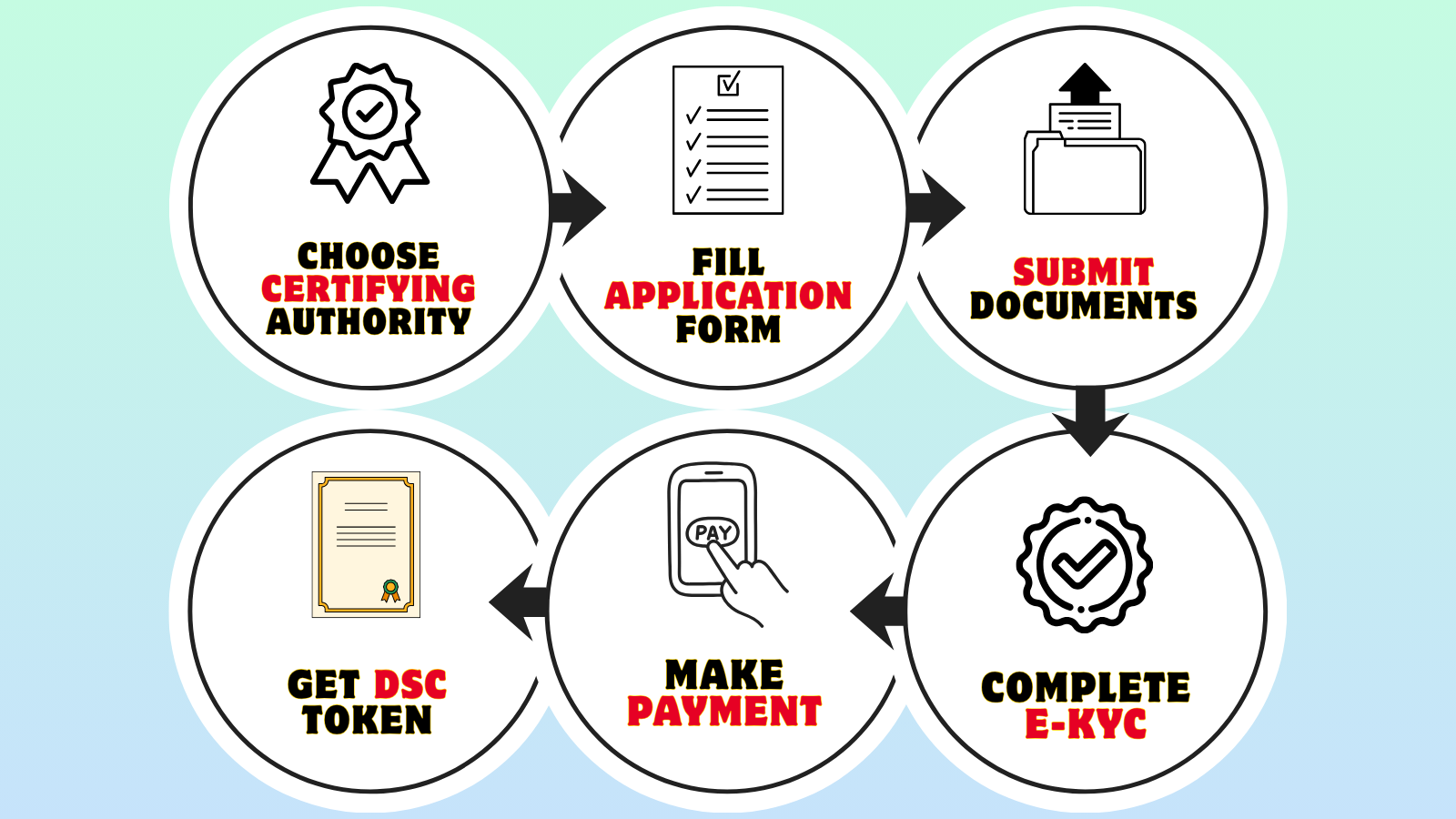
Step 1: Choosing a Certifying Authority (CA)
Select a licensed CA approved by the Government of India. You can find the list of authorized CAs on the official Controller of Certifying Authorities (CCA) portal (cca.gov.in).
Step 2: Filling out the Application Form
Complete the application form provided on the CA’s website. Ensure all details are accurate to avoid delays.
Step 3: Submitting Proof of Identity and Address
Submit valid identity and address documents such as Aadhaar card, PAN card (mandatory), Passport, bank statement, or Voter ID. The documents must match the details provided in the application.
Step 4: Complete e-KYC Verification
This step may involve:
- Aadhaar OTP verification
- Video KYC
The exact process depends on the Certifying Authority.
Step 5: Making Payment
Pay the applicable fee for the Class 3 DSC online or offline, depending on the CA’s payment options. Prices may vary slightly between providers.
Step 6: Issuance of DSC Token
After successful verification and payment, the Certifying Authority will issue your Class 3 DSC. You will receive a USB token or a downloadable digital certificate to use for signing and encryption.
Documents Required for Class 3 DSC in India
To apply for a Class 3 DSC, you need to submit specific documents depending on whether you are an individual or representing an organization. Here’s the list of documents:
1. Documents Required for an Individual
- Identity Proof: Valid government-issued ID such as Aadhaar Card, PAN Card, Passport, or Voter ID.
- Address Proof: Documents like Aadhaar Card, Passport, Voter ID, or Utility Bills that confirm your residential address.
- Photograph: Recent passport-sized photograph as per CA guidelines.
- Video Verification: Some Certifying Authorities require a short video verification call to confirm your identity as part of the Class 3 DSC process.
2. Documents Required for Organizations
The documents vary depending on the type of organization applying for the Class 3 DSC.
- Partnership deed
- PAN card of the firm
- Proof of address of the firm
- Identity and address proof of partners
b. Private Limited/Limited Liability Company
- Certificate of Incorporation
- Board Resolution approving DSC issuance
- PAN card of the company
- Identity and address proof of the authorized signatory
c. NGO (Non-Governmental Organization) /TRUST/ AOP (Association of Persons)
- Registration certificate of NGO/Trust/AOP
- PAN card of the entity
- Trust deed or registration documents
- Identity and address proof of the authorized signatory
d. Joint Venture
- JV agreement
- Certificate of incorporation/registration of JV partners
- PAN cards of the partners
- Identity and address proof of the authorized signatory
The Cost of Class 3 DSC in India
Understanding the cost of a Class 3 Digital Signature Certificate helps you plan your budget effectively.
Class 3 DSC Price Range
- For a 1-year validity, prices usually range from ₹1,000 to ₹2,500.
- For 2 or 3 years, prices typically increase proportionally, often up to ₹5,000, depending on the CA and certificate type.
- Combo certificates that include both signing and encryption are generally priced higher than signing-only certificates.
Factors Affecting Class 3 DSC Price
Several factors affect the Class 3 DSC price, including:
- Depending on the CA chosen, which may charge differently based on its service.
- The type of DSC, whether it is signing-only, encryption-only, or combo certificates.
- The validity period, as DSCs are available for 1, 2, or 3 years. Longer durations cost more upfront but save on renewal fees.
- Additional services like video verification, USB tokens, or priority processing may add to the cost.
Comprehensive Benefits of Class 3 Digital Signature Certificate
A Class 3 Digital Signature Certificate (DSC) offers secure and legally valid digital authentication for individuals and businesses. It is widely used for MCA filings, GST filings, income tax filing, e-tendering, and other online government transactions in India. Some major advantages of Class 3 DSC include:
- High Level of Security: Class 3 DSC provides strong encryption and secure digital authentication for online transactions and document signing.
- Legally Valid Digital Signature: Documents signed using a Class 3 Digital Signature Certificate are legally recognized under Indian law.
- Required for Government Filings: Class 3 DSC is mandatory for MCA company registration, LLP registration, GST filing, income tax filing, and e-procurement portals.
- Faster Online Transactions: Businesses can complete registrations, filings, tenders, and approvals quickly without physical paperwork.
- Secure E-Tender Participation: Class 3 DSC is essential for participating in government e-tenders and online procurement systems.
- Reduces Paperwork: Digital signatures help businesses move toward paperless compliance and secure online documentation.
- Improves Business Credibility: Using a Digital Signature Certificate enhances trust, security, and authenticity in digital communications and transactions.
Disadvantages of Class 3 Digital Signature Certificate
Although a Class 3 Digital Signature Certificate offers multiple benefits, users should also be aware of certain limitations and responsibilities associated with it.
- Limited Validity Period: A Class 3 DSC usually remains valid for 1 to 3 years and requires timely renewal after expiry.
- Risk of Token Loss or Damage: DSCs are commonly stored in USB tokens, which may get damaged, lost, or corrupted.
- Technical Setup Required: Users may need software installation, browser configuration, and token drivers for proper DSC usage.
- Cannot Be Shared: A Digital Signature Certificate is issued specifically to an individual or organization and cannot be legally shared with others.
- Additional Cost for Renewal: Businesses may need to pay renewal charges and token replacement costs after expiry.
- Misuse Risk if Compromised: If the DSC token password is shared or compromised, unauthorized use may occur.
DSC Validity and Renewal Process
A Class 3 DSC is valid for a fixed period, after which it must be renewed to continue its use.
- Validity Period: Most Class 3 DSCs are issued for 1 to 3 years.
- Renewal Timeline: You can renew your DSC up to 30 days before it expires.
- Renewal Process:
- Submit a renewal application with updated documents if required.
- Complete any required identity verification, including video verification if applicable.
- Pay the renewal fee based on your chosen validity period. - Consequences of Expiry: If your DSC expires, you will not be able to use it for signing or encryption until it is renewed. This may delay online filings or transactions.
How to Download a Class 3 Digital Signature Certificate
After successful verification and approval of your Class 3 Digital Signature Certificate (DSC) application, the DSC can be downloaded and installed on your USB token or computer system. The exact process may vary slightly depending on the Certifying Authority (CA) such as eMudhra, Capricorn, SafeScrypt, or Pantasign.
Follow these simple steps to download your Class 3 DSC online:
- Visit the official website of the Certifying Authority (CA) that issued your DSC.
- Go to the DSC download or certificate download section available on the portal.
- Enter your application number, registered mobile number, email ID, or PAN details as required.
- Complete the OTP verification or identity authentication process.
- Connect your USB token to the computer if the DSC needs to be downloaded directly into the token.
- Download and install the Digital Signature Certificate using the token management utility or DSC installation software provided by the Certifying Authority.
- After installation, verify the DSC details such as certificate holder name, validity period, and certificate type.
Once downloaded successfully, the Class 3 DSC can be used for MCA filings, GST filing, income tax filing, e-tendering, EPFO filings, ICEGATE registration, trademark filing, and other secure online government transactions. Users should keep their DSC token password secure and avoid sharing the Digital Signature Certificate with unauthorized individuals.
How to Check the Status of a Class 3 Digital Signature Certificate
Many individuals and business owners may already have an active Digital Signature Certificate but may not be aware of it. Users can easily check the status and validity of their DSC online by following these simple steps:
- Visit the website of the Certifying Authority (CA) that issued the DSC, such as eMudhra, Capricorn, SafeScrypt, or Pantasign.
- Open the DSC management or certificate status verification section on the portal.
- Enter details such as your PAN number, registered email ID, certificate serial number, or application reference number.
- Connect the DSC USB token to your computer if required.
- Complete OTP verification or authentication if applicable.
- The system will display the DSC status, validity period, certificate type, issuing authority, and expiry date.
Users can also check whether their DSC is installed on their computer through browser certificate settings or token management software. If the DSC has expired, renewal can be completed online through the authorized Certifying Authority.
Secure Your Digital Identity Today!
Get your Class 3 DSC with expert assistance from Formsy. Fast, secure, and hassle-free.
Frequently Asked Questions (FAQs)
Why were Class 1 & 2 DSCs phased out?
They were phased out to enhance overall digital security across India. By mandating Class 3, which requires the highest level of identity verification, the government aims to reduce the risk of cyber fraud and build greater trust in online transactions.
Can I use my DSC on multiple computers?
Yes. The DSC is stored on a portable USB token (like a pen drive). You can plug this token into any computer with the necessary drivers installed to sign documents digitally.
What happens if I lose my DSC USB token?
If you lose your token, you must immediately contact your Certifying Authority (CA) to revoke the certificate to prevent any misuse. After revocation, you will need to apply for a new DSC.
What is the difference between a "Signing" and a "Combo" certificate?
A "Signing" certificate is used only to digitally sign and authenticate documents. A "Combo" or "Sign & Encrypt" certificate includes both signing and encryption capabilities, allowing you to not only sign documents but also encrypt data for secure communication, such as emails or files.
Is a DSC mandatory for company registration in India?
Yes, a Digital Signature Certificate (DSC) is mandatory for company registration and for filing electronic forms with the MCA portal.
How long is a DSC valid?
A DSC is generally valid for 1 or 2 years, depending on the type selected at the time of application.
What documents are required to apply for a DSC?
Commonly required documents include PAN Card, Aadhaar Card, address proof, photograph, email ID, and mobile number.
Can a DSC be renewed after expiry?
Yes, a DSC can be renewed easily by submitting the required documents and completing the verification process again.
Is a DSC valid for both MCA and Income Tax filings?
Yes, a DSC can be used for MCA filings, Income Tax filings, GST filings, and other government-related online transactions.